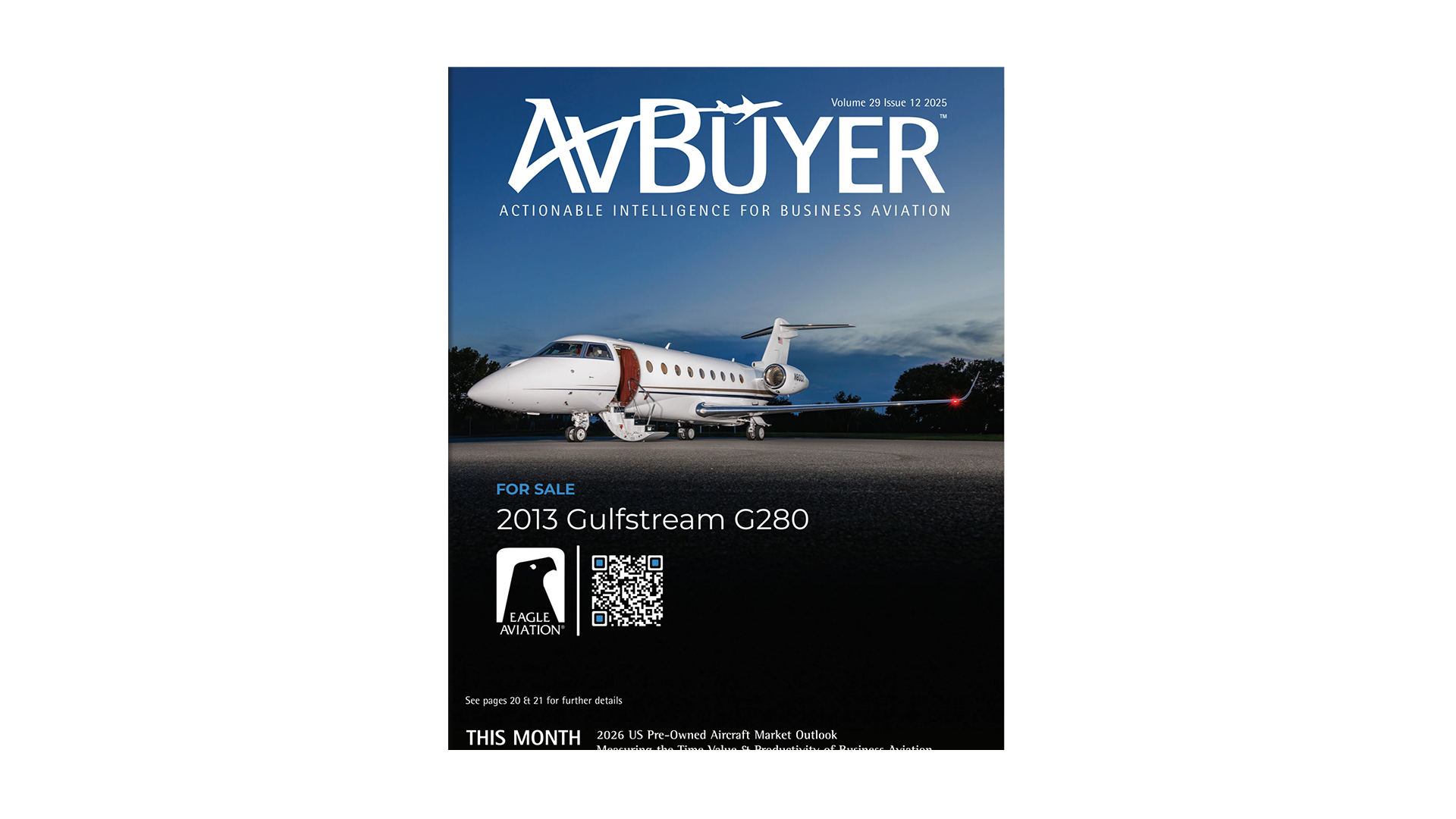
Timing the Sale of Your Business Jet
Knowing when to sell your business aircraft goes far beyond reading market trends. Felipe Reisch discovers the major factors for aircraft owners to consider from a selection of industry insiders…
In the business of aircraft sales, few decisions carry as much weight as timing. Beyond market fluctuations and buyer sentiment, the most successful transactions are often guided by a deeper awareness of operational and maintenance cycles.
Knowing when to list the airplane – whether immediately after a major inspection, ahead of an engine overhaul, or in conjunction with fiscal and tax planning – can significantly impact both marketability and price.
Though no single formula will guarantee the perfect moment, understanding the aircraft’s maintenance status, seasonality and upcoming model changes can all help provide owners a tangible advantage when preparing to sell.
Nevertheless, Todd Jackson, Vice President of Acquisitions for Elliott Jets, tends to caution owners not to try to time the market.
Although general market conditions are a good indicator, delaying the sale of an aircraft to try to maximize it is incredibly risky. Instead, he notes, “Owners should evaluate their own operational needs and known market windows. When customers sell an aircraft, they evaluate more than the sale of the asset.”
“Besides the current conditions of the market, one must consider [various] key aspects,” notes Andreas Strabel, Manager of Aircraft Sales at Aero-Dienst.
“These include upcoming major inspections (airframe, engine, landing gear), maintenance and PPI slot availability, and parts/kit availability for avionic upgrades, mandatory SB/ADs, and other retrofits required to fulfill the delivery conditions of the purchase agreement.”
Zipporah Marmor, North American Managing Partner at Opus Aero, similarly believes the timing should be considered from several angles. “First, practically speaking, when do they have important trips scheduled?” he asks.” When are their internal and external team available to board or offload the plane with minimal disturbance?”
What’s the ‘Sweet Spot’ for Marketing a Business Jet?
In many cases, aligning the sale with a clean maintenance record and sufficient flight hours before the next major event can create the most attractive balance between price, mission-readiness, and buyer confidence.
Indeed, Jackson believes the usual sweet spot is shortly after a major inspection or after completing a significant, documented service event. “The aircraft shows a long maintenance interval remaining, which reduces perceived near- term costs for buyers.
“When a customer buys an aircraft, the last thing they want to do is put it down for several weeks for a major inspection.”
But Marmor reiterates that the best time to sell is ultimately when it suits the seller. She agrees that a strong case can indeed be made to sell the plane after major maintenance, as it would then command a stronger price – likely with a limited pre- purchase inspection – and would appeal to a broader pool of risk- averse buyers.
“Conversely,” she adds, “there are buyers looking for aggressive pricing who have the experience and willingness to take on the risk and downtime associated with undertaking major maintenance, post-closing.
“There is no one-size-fits-all in this business, but rather opportunities to match the right aircraft and seller with the right buyer.”
Strabel notes that first-time buyers often prefer to buy an aircraft after a major inspection (e.g., a C-Check or 96/192-month inspection), enabling them to immediately begin operating the aircraft after closing the deal.
“More sophisticated buyers are more willing to take the risk of buying in the months leading up to a major inspection due to the negotiation leverage that can be used to reduce the purchase price.”
Reading Seasonal Patterns in Aircraft Sales
Seasonal trends continue to be a subtle yet powerful influence on aircraft sales activity. Year-end periods often bring heightened demand as corporations and high-net-worth individuals seek to close transactions before fiscal deadlines and take advantage of available tax incentives.
Conversely, summer and major travel seasons can slow activity, with buyers and operators focused on utilization rather than acquisition. Understanding these cycles allows sellers to position their aircraft when buyer motivation and financial planning converge.
With the return of bonus depreciation in the US, there’s certainly strong demand for year-end closings in the pre-owned business jet market,” Marmor says. “This fiscal incentive has reinvigorated buyer interest as companies and high-net-worth individuals seek to capitalize on tax advantages before the year concludes.”
“Year-end and early Q1 can be strong because corporate budgets and tax planning drive purchases,” Jackson concurs. “High travel times, like summer and holiday periods, can be slower.”
Strabel believes it depends very much on the type of buyer, with corporate flight departments generally pursuing long-term fleet renewal strategies in line with their fiscal year planning. “Air ambulance and charter operators usually experience peak operational demand in the summer season and prefer deal closings and the subsequent entry-into-service of their new jets before the peak season starts,” he adds.
Considerations for Aircraft Sellers Before Listing
Utilization levels, upcoming inspections, engine and avionics programs, and even the aircraft’s base of operations all contribute to its appeal and pricing.
High flight hours or pending maintenance can deter some buyers, as discussed above, while aircraft covered under comprehensive hourly engine/airframe programs often inspire greater confidence and command stronger offers.
Sellers must also factor in some practical considerations, such as when they can expect to receive delivery of any incoming replacement aircraft they’re acquiring. Moreover, there’s the upgrade timing, availability of maintenance slots, and local regulatory processes to consider, helping to ensure the aircraft enters the market in peak condition and with minimal barriers to a deal closing.
For Strabel, avionics upgrades and maintenance slots, as well as the availability of aviation authorities to complete de-registration and re- registration, are all worth considering.
In the operational realm, he mentions how high aircraft utilization will have a negative impact on the aircraft’s value and must be considered when determining its fair market value.
Moreover, “for aircraft previously based in regions with high corrosion risk, PPIs will additionally perform extended corrosion inspections which can cause further delays and increased costs,” he highlights.
In a market where depreciation and days on market can vary, Jackson highlights the importance of aligning the sale with residual value curves or upcoming model replacements. “If a newer model with meaningful performance or avionics improvements is about to enter the market, values for the outgoing model can soften.”
Therefore, aligning sale timing to avoid a wave of newer models or to hit peak residuals can protect value, he adds. “Monitor residual trends and plan so you are not trying to sell at the tail end of a depreciation curve.”
Alignment with the stock market is a key factor, notes Marmor, with stock market growth generally leading to a stronger market and increased sales and acquisitions. In terms of operational factors, she adds that an aircraft is expected to be current on maintenance and equipment.
“So, what a seller might think is an upgrade or a solid investment—if it’s required, it’s expected to be done and won’t necessarily result in a higher price. If it’s not done, though, you will likely see a penalty.”
How to Avoid Poor Sales Timing for Your Aircraft
Timing can either be an asset or a liability. Listing too close to a major inspection after an upgrade that hasn’t yet added market value, or during a saturated resale period can quickly erode a seller’s leverage. Well-timed listings reduce buyer hesitation, streamline due diligence, and turn interest into commitment.
According to Jackson, presenting the aircraft when comparable inventory is limited also strengthens leverage. In essence, precision in timing often matters as much as presentation. But is there such a thing as poor sales timing?
Marmor emphasizes that selling an aircraft too close to major inspections can significantly impact its value, as it provides substantial leverage for the buyer. “The negotiations will revolve around whether the seller will pay for the maintenance (resulting in a higher selling price) or if the buyer will accept the aircraft as-is and purchase it at a lower value to cover the maintenance costs.”
“Selling an aircraft a few hours before an engine MPI/Overhaul event will hurt the aircraft value because the buyer wants to avoid taking the risk of longer downtime due to scarcity of engine spare parts or insufficient loaner engine availability, even if the engines are on a program,” Strabel adds.
He and Jackson agree that “time kills deals,” and a deal is likely to fail the longer it takes to finalize.
Ultimately, it’s important to be realistic as a seller: selling an aircraft can be a time-consuming process, and it’s essential to consider that various factors can impact the market’s response. Indeed, Marmor emphasizes that a broker cannot guarantee a specific absorption rate.
When to Discuss Selling Your Aircraft?
The decision to sell an aircraft should start months prior to it eventually being listed, allowing time for thorough planning and preparation.
Engaging a broker well ahead of the intended sale date allows sellers time to align maintenance schedules, complete documentation, and address any cosmetic or technical items that could slow negotiations later, as well as line up a replacement aircraft if needed.
Marmor notes that in an ideal world, the seller would have completed all necessary work to ensure the aircraft’s pristine condition and that it’s priced fairly. This is where the role of the brokers comes to the fore: to provide sellers with all the available market data and remain transparent about what to expect.
“Of course, once we’ve done our due diligence, the seller must accept and understand the information we’ve provided,” she adds. “We always advise our sellers on the best course of action, but sometimes they have a clear idea of what they want, and our job is to work around it and find a mutually beneficial solution.”
Jackson believes that starting the conversation at least three months before a client wants the aircraft on the market is ideal – but where complex upgrades or program enrolments are likely to be required, leaving more time is advisable.
“Early coordination with a broker and your maintenance provider lets you produce a realistic timeline, prepare documentation, and choose the optimal listing.”
Some Final Thoughts on Timing the Sale of Your Aircraft…
While no formula guarantees the perfect moment, the most successful outcomes often come for those who plan ahead, stay informed, and treat timing as a strategic decision, and not to those who merely react to market noise.
While it is true that buyers generally prefer freshly inspected aircraft because it reduces near-term maintenance risk, they are also likely to scrutinize the quality and necessity of any work undertaken. “If the work is clearly documented and was done for sound reasons, buyers will pay a premium,” Jackson assures. “If it looks like cosmetic or unnecessary work intended to boost the price, buyers will be cautious.”
Reasons motivating owners to sell generally include cost-related issues, a desire to upgrade or downgrade, or expand their fleet, but Marmor says there are “no set rules to define the clients we work with, whether they are sellers or buyers.
“Some sellers can take years to make a final decision, while others have very structured ideas – which usually makes our lives easier.”
So, in conclusion, when should the conversation about timing begin to ensure the aircraft is presented at its strongest point? “It should be…addressed as early as possible,” Strabel says.
Click to Read the AvBuyer Magazine